


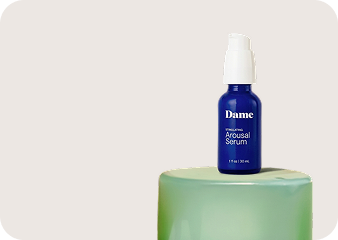
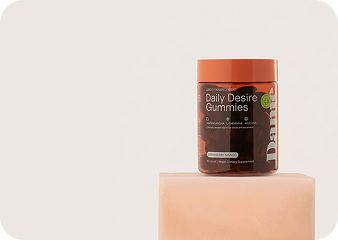


An arousal serum is a topical product applied externally to the vulva and clitoris before or during sex, formulated to increase local blood flow and sensitivity. It's not a lubricant, it's not a hormone, and it's not a substitute for naturally occurring arousal.
Who Is It Actually For?
These products are formulated for anyone whose sensitivity during play has dropped for a clear reason, whether hormonal change, medication, or ordinary variation, and who want a little more physical response to work with.
What it actually does (and doesn't do)
We know physical arousal involves blood flow. Engorgement of the clitoris and surrounding tissue produces the heightened sensitivity most people associate with being “turned on”. For all sorts of reasons, that response can be slower or weaker. An arousal serum works on that mechanism locally, encouraging blood flow to the area it is applied to, which many people experience as warmth, tingling, or a sharper response to touch.
What it can’t do is generate desire. Desire and physical arousal are separate systems, so if the issue is that you don't want sex, a serum is aimed at the wrong thing.
Arousal serum vs. lubricant: two different jobs
These two get mixed up a lot, but they actually do different jobs. A lubricant reduces friction, internal or external, works immediately, and can be reapplied as needed. A serum increases local blood flow and sensitivity, goes externally on the clitoris and vulva in a small amount, works within a few minutes of application, and usually doesn't need reapplying within one session. Using both is common. Serum goes on first, lube after.
Our Arousal Serum (dame.com/products/arousal-serum), at $30, is designed for exactly this pairing: applied to the clitoris ahead of time, then layered with our water-based Aloe Lube (dame.com/products/aloe-lube) for comfort during sex.
Who it's for
A few situations tend to come up again and again:
- People noticing reduced sensitivity during perimenopause or menopause, when lower estrogen changes both lubrication and tissue responsiveness.
- People taking medications that blunt arousal, including several classes of antidepressants and hormonal contraception.
- People who can take a long time to reach a level of arousal that feels right, and want a “head start” rather than a longer runway.
- People coming out of a period of low sexual activity, where sensitivity feels dulled rather than absent.
Just as important is who it's not for. If sex is painful, a serum is not the answer and may aggravate things. Pain during sex has clear identifiable causes, and the International Society for the Study of Women's Sexual Health and American College of Obstetricians and Gynecologists both treat persistent dyspareunia as a clinical matter rather than a product problem. If that's you, please talk to your doctor.
Is an arousal serum safe?
For most people, when used as directed and externally, yes. You can apply a small amount first and see how your skin responds, since the vulva is more reactive than skin elsewhere. Keep it external and off the vaginal canal unless the label says otherwise. If you're pregnant, breastfeeding, or managing any relevant condition, check with a clinician before adding anything topical into the mix.
What to expect the first time
Something subtle: most people describe warmth or a heightened response to touch rather than a dramatic effect. It usually takes a few minutes to arrive. Applying more product does not reliably make the effect stronger, and can actually increase the chance of irritation.
Most disappointment comes from expecting a serum to do the whole job. It performs best as one input alongside adequate time, stimulation you like, and enough lubrication that nothing is uncomfortable. Paired with a vibrator for focused clitoral stimulation, it tends to be more noticeable than used on its own.
Questions people actually ask
Do arousal serums work?
Many people report increased warmth and sensitivity from a serum applied to the clitoris, since these products work by encouraging local blood flow. The effect is usually subtle, and it does not create desire, which is a separate system from physical arousal.
Is an arousal serum the same as a lubricant?
No. A lubricant reduces the feeling of physical friction; arousal serum changes sensation by increasing blood flow to the area. Many people use both in the same session, with serum first.
Who should not use an arousal serum?
Anyone experiencing pain during sex, anyone with a vulvar pain condition, and anyone pregnant or breastfeeding should talk to a clinician first. Sensitive skin? Test a small amount before full use.
How long does an arousal serum take to work?
Usually a few minutes. Apply a small amount to the clitoris and vulva, wait, and add stimulation rather than adding more product.