Saying the words "I'm sorry" is a good start, but it's not enough.
Apologies are a three-step process: Apologize, forgive, and begin again.
A great apology involves both the giver and the receiver of the apology.
Remember the poster with an adorable cartoon couple and the caption, “Love means never having to say you’re sorry”? Puh-leese!
In my clinical opinion, the creator of that slogan ended up desolate and divorced. He or she was fifty shades of wrong. I’d say—and research clearly shows—that love means saying “I’m sorry” a lot.
And while “I’m sorry” is a good start, I argue that it is not enough. Let’s look at it this way. Say you accidentally spill a glass of lemonade all over the table and thoroughly splash your sweetheart. Then you say, “I’m sorry.”
Are you done?
Of course not. You will go on to clean up the mess so you can begin fresh. What’s more, if the two of you are in this together, your mate will gamely lend a hand to repair the mistake with you.
What if we apply this to arguments, harsh words, or thoughtless actions? What if we make an agreement to clean up our marital messes together, regardless of who spilled the lemonade?
One of the skills I teach the couples in my online program (admittedly a skill I need to use far too often in my own relationship) is the art of the mindful apology.
We will all fall off the rails sometime, but it is what we do to get back on track that matters.
That’s why I teach couples to apologize in a three-step process.
Apologize
Forgive
Begin Again
This is a process of compassionate communication that takes two of you, not just the one who messed up. Watch this video for more:
As you see, it takes two to tango, and therefore it takes two to redo the botched dance steps. To give or receive a good apology is an art, and a great apology involves both of you.
In compassionate communication, there is the giver and the receiver.
The giver knows “I’ve hurt you, I realize it. As the offender, I offer you my repair.”
The receiver sees their beloved struggle and realizes how important it is to hear the apology and accept it with love.
Both the offender and the offended bear responsibility for their relationship and for bringing together what was torn asunder. Responsible, loving repair is a two-person job.
Here is the Mindful Apology in three steps:
Apologize.
The offender offers their apology in the form Own, Repair, Improve. “I did X and I’m sorry (Y) and I vow to do better (Z).”
If I’ve made a mistake, let’s use the somewhat silly spilled lemonade example. I might say, “I should have been more careful with the lemonade (own). I’m sorry I made a mess (repair), and I’m going to slow down when I place things on the table from now on (vow to do better).”
Forgive.
The offended person accepts the apology in the form of Thank, Acknowledge, Accept. “Thank you for saying X, I appreciate you owning what you said (Y), and I forgive you for (Z).”
When you are the offended party, it can be tempting to take a position of self-righteousness and punish your partner for making mistakes. In a word? Don’t. After all, in the not too distant future, it will be you offering your apology. If you are in a state of love and compassion, remember the two of you are in this moment, this relationship, and this life together. You will strive to accept the apology with kindness.
You might say, “Thank you for saying that (thank). I appreciate you owning that when you rush, you sometimes make a mess that affects us both (acknowledge). It’s no biggie, babe (forgive).”
Begin again.
Unfinished business accumulates. So when you let go of the small slights and even the big wounds as they happen, you can clear the table and can begin again. You might want to create a “begin again” ritual. After the mindful apology, you share a hug, a kiss, or a high-five.
Next?
Well, I want you to create a friendly competition with your beloved. Who can apologize with the most compassion and skill? Because whether you are the one who missteps or the one who gets your foot stepped on, you are both hurting in the aftermath of the unpleasant tango you’ve created. The mindful apology is a relationship skill that takes two people, four feet, and two warm hearts. I invite you to slow dance your way to beautiful, loving repair.
Then, despite the inevitable lemons in every love life, you’ll have a reliable way to turn them into fresh lemonade.
This article originally appeared on the Gottman Institute’s blog and was reposted with permission.
Get the best sent to your inbox, every month
Anything-but-small-talk and weekly inspiration from intimacy experts. Plus, exclusive offers from Dame.
A: A vibrator is a powerful and versatile personal pleasure device that creates vibrations to stimulate various sensitive areas of your body, like the clitoris and G-spot. They come in a wide range of shapes, sizes, and features, so there's something for everyone.
Vibrators can be used on almost any erogenous zone, offering unique sensations that can boost your pleasure and help you discover what feels amazing. Some are designed to mimic penetration, while others focus on external stimulation to give you an unforgettable experience.
Did you know that fewer than 20% of vulva-owner can climax solely with vaginal stimulation or intercourse? This is why vibrators have been growing in popularity, and why companies like Dame are dedicated to amplifying the conversation of closing the pleasure gap.
A: Using a vibrator can enhance your pleasure significantly, but where you use them differs based on preference and if you are a vulva or penis owner. Begin by selecting a comfortable and private space where you feel at ease. If desired, use sex toy-safe lubrication, as this will enhance sensations and reduce friction. Turn on your vibrator (usually a button on the opposite end of the "head"), and explore different settings or intensities using the buttons provided on the device and gradually finding what feels best for you.
For an additional step-by-step guide, check out detailed instructions here, which talk about insights on techniques, positioning, and tips for maximum pleasure.
A: There are numerous types of vibrators, each designed for various forms of stimulation:
Clit Vibrator: These are specifically shaped to target the clitoris, often with a compact and discreet design for ease of use.
G-spot Vibrator: Typically curved, these vibrators are designed to reach and stimulate the G-spot, providing deeper sensations during penetration.
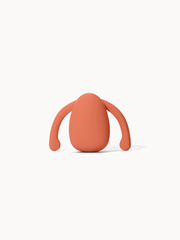
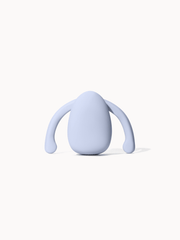
Finger Vibrator: Small and often worn on the fingertip, these offer precise control and are perfect for targeted stimulation.
Couples Vibrator: Designed to be worn during intercourse, they provide simultaneous pleasure by stimulating both partners.
Vibrating Cock Ring: Worn around the base of the penis, these enhance sensations for both partners during sex and can help with stamina.
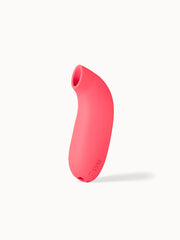
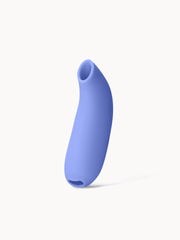
Suction Vibrator: These use suction air-pulse technology to create a unique sensation for the clitoris, often simulating oral stimulation.
Wand Vibrator: Known for its powerful motors and larger size, these versatile devices can be used all over the body for broad-based pleasure.
Bullet Vibrator: Compact and portable and designed for targeted stimulation and are perfect for both solo and partnered play.
A: Yes! Dame vibrators are designed to be waterproof, making them suitable for use in the bath or shower. They also come with rechargeable batteries, eliminating the need for disposable batteries and ensuring long-lasting pleasure. Most can be charged via USB, making it easy to keep them ready for when the mood strikes.
A: Dame vibrators are touted for their whisper-quiet motors, designed to pleasure without drawing attention or distracting during intimate moments. If you're looking for a discreet vibrator, try looking for something smaller in size, like a bullet vibrator.
It's Black Friday.
Add products to your cart to reveal up to 60% off.
Choosing a selection results in a full page refresh.