



Oh baby! That newborn is finally asleep, you’re feeling frisky, you’ve finally got the six week clear from your doctor (or potentially earlier), and it feels right to get busy with yourself or with your partner. Hold up- ouch! With a perineal tear, penetration can feel less sexy and more painful. What’s going on down there? And will it ever feel better?
What’s the perineum?
All human bodies have a perineum! The perineum, simply put, is the section of tissue between the anus and either the base of the scrotum or the opening to the vagina. For vagina owners, it’s the meeting place for a lot of different types of tissue- skin, mucous membrane, and muscles of the pelvic floor. As a reminder, the pelvic floor is a group of muscles that lines the pelvis, a bowl-shaped bone (made up of two halves) that joins with the sacrum, femur, and lower back. The pelvic floor is divided into three layers, and all three of these layers mesh together at the perineum. The muscles that may be affected by a perineal tear include the bulbocavernosus, superficial/deep transverse perineal, and the internal/external anal sphincter. Perineal tears are classified by degree depending on how much tissue is torn.
- First degree tears involve tearing of the skin of the perineum and the vaginal mucosa
- Second degree tears include the vaginal mucosa and the perineal muscles
- Third degree tears include the vaginal mucosa, perineal muscles and the anal sphincter complex
- Fourth degree tears include all of the above plus the anorectal mucosa
First degree tears often don’t require stitches because, like a cut in your mouth, mucous membranes have excellent blood supply and tend to heal quickly. Second through fourth degree tears will often require stitches to reunite the muscle fibers.
Why do perineal tears happen?
I wish I could tell you that with the right knowledge or exercises that we could guarantee a smooth labor and delivery, but we both know that’s not our reality. Perineal tears can be part of the birth experience for many folks who attempt or complete a vaginal delivery. They happen because of an enormous, unpredictable and often rapid stretch across the perineum during labor and delivery, causing the tissue to tear. Episiotomies, or using a scalpel to intentionally cut the perineum, were commonly performed in the United States (60.9% of all vaginal deliveries in 1979) aiming to create a larger vaginal opening for an infant’s head. While we can understand the intention behind the incision, episiotomies tend to increase the risk for anal sphincter injuries, and it’s practice has since declined, to 24.5% of all vaginal deliveries in 2004. Rates of cesarean (c-section) deliveries are rising, from 4.5% in 1965, to 22.7% in 1985 to 30.5% of all deliveries in 2008, so it may be that providers opt for this route if they anticipate a difficult labor and delivery.
Can you prevent a perineal tear?
Not entirely, but you can reduce your risk. Laying down (supine), laying down with knees bent (lithotomy), and squatting are associated with the highest risk of a perineal tear because of the orientation of the infant’s head relative to the perineum. But if you have your heart set on using that squat bar or birthing stool, don’t let me talk you out of it- laboring in these positions doesn’t increase the risk, just delivery. Squatting and upright positions can actually be excellent positions to accelerate the labor process before pushing starts. When it comes time to push, all fours (quadruped) and sidelying (epidural friendly!) have the lowest rate of perineal tears.
Healing a perineal tear
Perineal tears can feel like a sharp, ripping pain, and they can make sitting painful and, partnered or not, penetration of any kind painful. With any tissue healing, don’t overlook the simple things like adequate nutrition, hydration, and sleep – these are lofty goals when you’ve got a newborn, but nevertheless important. Keep your timeline realistic–we’re talking about healing torn muscles here. It takes time for them to rebuild and regain elasticity. There’s other steps you can take to help encourage your tissue to heal.
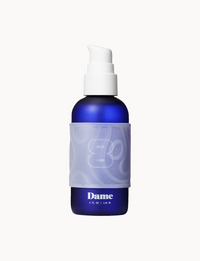
- For penetration of any kind, a high quality lube is your BFF to decrease friction on the perineal tissues
- Topical medications, such as lidocaine, are prescribed by a healthcare professional and can help to relieve pain by reducing sensation in the short term, though may not be a long term solution
- Cold packs and Sitz baths can be easy options to decrease acute pain immediately postpartum
- Find a provider that specializes in treating pelvic floor conditions, like a physical therapist, chiropractor, or ND, for a personalized evaluation
- Perform a perineal massage!
How to perform perineal massage
This is excellent to perform either during pregnancy to prepare the tissue for labor and delivery, or to perform postpartum to help desensitize the tissue.
- Get cozy, find a comfortable position to reach your perineum- this can be on your bed with pillow support, or in the bathtub with warm water. If not in the water, grab some lube!
- Insert both thumbs or two fingers into vaginal opening, and provide slow, steady pressure towards the back of the vagina (towards the rectum)
- As you continue to breathe, hold this stretch until you feel a slight pinch or pull, like the amount of pressure you would use to check the ripeness of an avocado
- Continue to breathe, and slowly glide thumbs/fingers away from each other into a ‘U’ shape. Repeat for 10 minutes, allowing yourself to be gentle and
- Afterwards, can use a warm or cold pack on perineum to reduce any soreness, or soak in a tub of warm water
Though we can’t control every aspect of labor and delivery, we can take the holistic steps to heal our tissue. Injuries during labor and delivery can be a daunting prospect, but understanding our muscle groups and how they work can keep these injuries from being too scary.