two people hugging after an apology
Relationships

Relationship Problems that You Shouldn’t Fix

5 min read

Created on 03/05/2022
Updated on 13/10/2022
Edie Elliott Granger

Edie Elliott Granger

Sexual Wellness Writer & Educator

6 years of experience

Sexual wellness Orgasm science Pleasure education

Edie Elliott Granger is a sexual wellness writer specializing in pleasure, intimacy, and evidence-based education. She translates scientific research into practical, accessible guidance that empowers readers to explore their sexuality safely and confidently. Her work for Dame centers on normalizing conversations around sex, cannabis, and the body without stigma or misinformation.

Edie Elliott Granger

Edie Elliott Granger

Senior editor & content strategist

6 years of experience

Sexual wellness Orgasm science Pleasure education

Edie Elliott Granger is a sexual wellness writer specializing in pleasure, intimacy, and evidence-based education. She translates scientific research into practical, accessible guidance that empowers readers to explore their sexuality safely and confidently. Her work for Dame centers on normalizing conversations around sex, cannabis, and the body without stigma or misinformation.

It’s a novel concept: what if the issues in your relationship were mainly unfixable? Actually, according to research, they are. In work with over 3,000 couples, relationship researchers Julie and John Gottman of the Gottman Institute found that 69% of relationship problems are not “fixable.” For some, it’s a comforting stat, and for others, it can be unsettling to know that many of your problems aren’t going anywhere. Imagine if the conflicts in your relationship had no clean resolution you could wrap up and tie with a bow. What do you do? Throwing up your hands and screaming into the void is one option, but there are other helpful courses to take, too. Unbeknownst to many, it’s entirely possible to have a happy and healthy relationship with unfixable problems.

What kinds of problems are unfixable? Which problems can you fix?

Think about the one fight that you and your partner always end up in, no matter how hard you try not to. You’ll likely continue having that fight, the research suggests. But, there are ways to lessen its intensity and find a deeper source of understanding. So, what types of issues are fixable? The Gottman Institute lists that solvable problems are situational ones. For instance, one partner is stuck with a heavier load of childcare or housecleaning than the other. Or, one partner’s parents come over unannounced every week. With problem-solving skills, these issues can be resolved.
Fixing is not always the best approach when it comes to love and relationships. But this doesn’t mean ignoring your issues or letting them fester, either.
Perpetual problems can be fundamental differences in personality traits or differences in personal or lifestyle needs. To illustrate, one partner may need more time alone, and the other doesn’t understand why. Perpetual problems can also be an issue that’s longstanding and comes up repeatedly, such as financial habits or sexual frequency. It might be comforting to know that all couples have perpetual problems! When problems feel stuck, the Gottman Institute defines them as gridlocked perpetual problems, which are problems that, when approached, feel like the conversation is going nowhere and can come fraught with discomfort or intense feelings for each partner. “Every couple has two or three things that will likely never completely resolve in the course of their relationship. It doesn’t matter who you are with, there is going to be conflict and some issues will just never be worked out the way we hope. This means that for the rest of the relationship, these perpetual issues will likely exist and will have the potential to blow up and cause hurt feelings or resentment,” said Dana McNeil, PsyD, LMFT, Founder of the Relationship Place and Certified Gottman Therapist. Fixing is not always the best approach when it comes to love and relationships. But this doesn’t mean ignoring your issues or letting them fester, either. If the conflict does not need to be fixed, what should you do? McNeil explained, “When a partner decides to be vulnerable and share a ‘problem’ the response they want to receive is support, empathy, compassion, and connection with their emotions. Unless you hear your partner say to you: ‘What do you think I should do?’ you can assume they are not looking for you to instruct them on how to fix things. They are asking for you to stop doing, listen deeply, and hold space for their pain or confusion.”


How to find resolve without resolving

Why do people feel the urge to fix? McNeil said that the need to fix is generally driven by discomfort. “You are never going to be able to fix another person’s feelings, and it feels horrible to see your partner in pain. We try to offer solutions because it feels like we are doing something. The problem is offering solutions is received like you are avoiding dealing with your partner’s feelings and can often come across as minimizing, or worse, ignoring.” It may seem counterintuitive not to fix because, after all, this urge can also stem from wanting things to feel better. However, if you’ve historically tried the “fix-it” approach and found no resolve, it might be time to change your perspective of the problem and course of action. The Gottman Institute suggests that an important distinction is “managing” versus “resolving.” Managing conflict allows partners to constructively understand one another’s perspective and find acceptance, whereas resolving is an attempt to solve and complete. “You can’t compromise like people who love each other if you don’t check in with your partner about what is driving their perspective,” said McNeil. McNeil explained that conflict will remain if partners don’t feel that their perspective is validated. Understanding what drives their stance or emotional response can help ease some of the tension.
How else should partners go about conflict management?

You might take vitamins or medication every day to manage a condition. The same can be said about what you can do to mitigate a perpetual conflict. Rather than avoiding it or thinking the conflict won’t happen again, couples can come up with temporary compromises that they frequently check in and revisit, much like a daily multivitamin. Each time, you use collective feedback to continue reshaping the compromise, McNeil explained. It’s healthy to normalize revisiting perpetual conflict. “You may need to revisit it as many times as the emotions come up as unsettled, still hurting, or something feels unfair,” said McNeil. Remember, perpetual issues might not be fixable, but that doesn’t always mean they will always carry the same intensity. If your conflicts feel stuck, or you can’t seem to step back and understand each other’s perspective as partners, it might be time to seek help from a couple’s counselor. Partners who have habitually operated from a place of “fixing” might just find that a new approach can shift the conflict dynamic and provide relief.

Leave a comment

FAQs

A: A vibrator is a powerful and versatile personal pleasure device that creates vibrations to stimulate various sensitive areas of your body, like the clitoris and G-spot. They come in a wide range of shapes, sizes, and features, so there's something for everyone.

Vibrators can be used on almost any erogenous zone, offering unique sensations that can boost your pleasure and help you discover what feels amazing. Some are designed to mimic penetration, while others focus on external stimulation to give you an unforgettable experience.

Did you know that fewer than 20% of vulva-owner can climax solely with vaginal stimulation or intercourse? This is why vibrators have been growing in popularity, and why companies like Dame are dedicated to amplifying the conversation of closing the pleasure gap.

Learn more on the blog.

A: Using a vibrator can enhance your pleasure significantly, but where you use them differs based on preference and if you are a vulva or penis owner. Begin by selecting a comfortable and private space where you feel at ease. If desired, use sex toy-safe lubrication, as this will enhance sensations and reduce friction. Turn on your vibrator (usually a button on the opposite end of the "head"), and explore different settings or intensities using the buttons provided on the device and gradually finding what feels best for you.

For an additional step-by-step guide, check out detailed instructions here, which talk about insights on techniques, positioning, and tips for maximum pleasure.

A: There are numerous types of vibrators, each designed for various forms of stimulation:

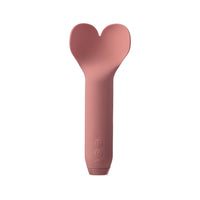
Clit Vibrator: These are specifically shaped to target the clitoris, often with a compact and discreet design for ease of use.

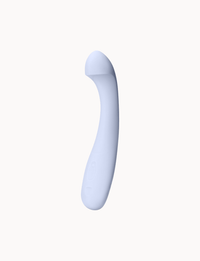
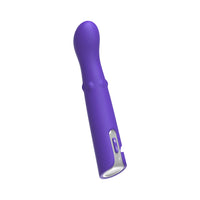
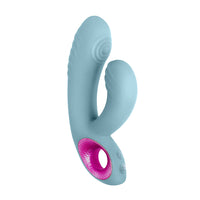
G-spot Vibrator: Typically curved, these vibrators are designed to reach and stimulate the G-spot, providing deeper sensations during penetration.

Finger Vibrator: Small and often worn on the fingertip, these offer precise control and are perfect for targeted stimulation.

Couples Vibrator: Designed to be worn during intercourse, they provide simultaneous pleasure by stimulating both partners.

Vibrating Cock Ring: Worn around the base of the penis, these enhance sensations for both partners during sex and can help with stamina.

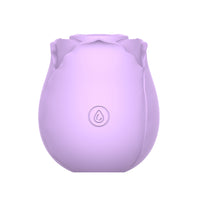
Suction Vibrator: These use suction air-pulse technology to create a unique sensation for the clitoris, often simulating oral stimulation.

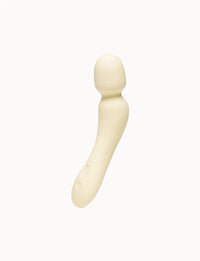
Wand Vibrator: Known for its powerful motors and larger size, these versatile devices can be used all over the body for broad-based pleasure.

Bullet Vibrator: Compact and portable and designed for targeted stimulation and are perfect for both solo and partnered play.

A: Yes! Dame vibrators are designed to be waterproof, making them suitable for use in the bath or shower. They also come with rechargeable batteries, eliminating the need for disposable batteries and ensuring long-lasting pleasure. Most can be charged via USB, making it easy to keep them ready for when the mood strikes.

A: Dame vibrators are touted for their whisper-quiet motors, designed to pleasure without drawing attention or distracting during intimate moments. If you're looking for a discreet vibrator, try looking for something smaller in size, like a bullet vibrator.