Man-Spilling: When Men Try to Use You as Their Therapist
Relationships

Man-Spilling: When Men Try to Use You as Their Therapist

6 min read

Created on 04/01/2021
Updated on 13/10/2022
Edie Elliott Granger

Edie Elliott Granger

Sexual Wellness Writer & Educator

6 years of experience

Sexual wellness Orgasm science Pleasure education

Edie Elliott Granger is a sexual wellness writer specializing in pleasure, intimacy, and evidence-based education. She translates scientific research into practical, accessible guidance that empowers readers to explore their sexuality safely and confidently. Her work for Dame centers on normalizing conversations around sex, cannabis, and the body without stigma or misinformation.

Edie Elliott Granger

Edie Elliott Granger

Senior editor & content strategist

6 years of experience

Sexual wellness Orgasm science Pleasure education

Edie Elliott Granger is a sexual wellness writer specializing in pleasure, intimacy, and evidence-based education. She translates scientific research into practical, accessible guidance that empowers readers to explore their sexuality safely and confidently. Her work for Dame centers on normalizing conversations around sex, cannabis, and the body without stigma or misinformation.

The other day, I was on the phone with a male friend when he started discussing issues he faced during his childhood. He went on for more than half an hour as I tried to get a word in to no avail, hesitant to interrupt someone who was being so vulnerable. Eventually, the connection got cut off, and he kept on talking, not realizing I was no longer on the line. Over the next few weeks, he kept calling me and telling me all about his problems, never asking me about my own. This seems to happen to women a lot. Kate, 33, had a coworker who would invite her to happy hour just to vent about a woman he was pursuing; once they successfully got together, he stopped hanging out with her. Elisabeth, 35, had a male friend who would constantly message her about just one topic: issues he was facing in his sex life. When she got tired of it and stopped responding, he started calling her a bitch. Ashley, 27, randomly heard from a high school classmate she hadn’t spoken to for three years during lockdown, and he began constantly texting her about a recent breakup, double-texting when she didn’t reply. To an extent, it’s normal to vent to your friends about your problems. The issue is when these conversations become one-sided, says licensed clinical psychologist Jaime Zuckerman, PsyD. “Normal, healthy confiding in a friend should be a mutual exchange,” she explains. “When someone uses their friend as a therapist, the dynamic becomes less equitable. The friend may feel pressure or an obligation to give advice.” If the other person isn’t as curious about your life as they expect you to be about theirs, or they’re not asking permission before they unload their worries on you, it’s possible you’re being used, says Zuckerman. Pay attention to any feelings of guilt or resentment, because these are signs your boundaries have been violated. One reason men in particular may be engaging in this behavior is that they’re less likely to seek actual therapy. One survey found that 28 percent of men with mental health issues did not seek professional help, compared to 19 percent of women.
"You can feel more comfortable taking up more of the emotional space in a relationship when you're the one with more privilege."
“Yet another possible rationale for this pattern is that as kids, men viewed women, especially mothers, as the nurturers, the ones they could be most vulnerable with,” Zuckerman explains. “This view of women being confidants then carries over into their adult female relationships.” Men may also be unlikely to confide in other men, who have been socialized not to discuss feelings and may not provide the level of support women might. On top of that, they might fear that other men will see them as weak if they talk about their struggles, says therapist Julia Koerwer, LMSW. “Since emotional labor is often unbalanced across all sorts of privileged identities, it's possible that there's an underlying theme of being more comfortable taking up more of the emotional space in a relationship when you're the one with more privilege,” Kowerwer adds. If you feel like someone is doing this to you, you can address it in the moment with a simple line like “I’m so sorry, I would love to listen, but I must take another call” or “I would love to hear more, but I am so swamped with work,” says Zuckerman. You could put the blame on the circumstance — “I try not to have these kinds of conversations in the office” — or put the problem-solving burden back on them by asking, “What do you think you’ll do?” says Kowerwer. You can also be honest about the fact that you feel unqualified to help them and recommend they talk to a therapist. Another option is to stand up for your own emotional needs by saying “I am happy to listen to you, but right now I really need someone to listen to me” or “I am having a rough day; can we shelve this? I have too much on my mind.” Or, for a more direct approach, you can say something like, “I know you are totally overwhelmed right now, but you haven’t asked me how I am doing.” Don’t be afraid to point out what’s happening — it’s possible they’re not aware of it, says Zuckerman, and if they’re comfortable enough to share their problems with you, they’ll likely be open to hearing you out, also.
“It is critical to set limits with others and model healthy boundaries, even if it is brutally uncomfortable to do so."
If you aren’t comfortable addressing the issue in the moment or it’s not getting through to them, Kowerwer suggests having a separate conversation where you say something like, "I don't know if you realize this, but a lot of the time, our conversations end up focused on whatever you're dealing with and supporting you, and it feels a little unbalanced to me. In the future, before you launch into something like that, can you ask me if I'm up for hearing about it?" Once you’ve set these boundaries, you may need to reinforce them later on. “The other person is used to using you for emotional labor, and it's going to take their brain a little bit to get used to interacting with you in a different way,” Kowerwer explains. “Be ready to cut them off: ‘Hey, this is what we talked about before, and I'm not up for a conversation like this right now.’” Then, you might suggest another topic of discussion. If that doesn’t work, be prepared to hang up the phone or leave the room with friendly but firm words like, "Like I said, I'm really not up for talking about this sort of thing right now, so I'm going to head out. Talk to you next time!" You can also set boundaries with yourself, like not responding to texts that are about the other person’s problems. “It is critical to set limits with others and model healthy boundaries, even if it is brutally uncomfortable to do so,” Zuckerman explains. “When you routinely put your own needs second, you are teaching others that your needs are not a priority. They are less likely to consider your needs and respect your boundaries.” You also don’t need to stay in the relationship, since boundary-setting itself can be taxing, says Kowerwer. If you’re having trouble setting boundaries or leaving a situation like this, it may be useful to examine your own people-pleasing tendencies. “People who always take care of others at the expense of their own needs will often feel tremendous guilt setting boundaries,” Zuckerman explains. “, feel guilty and at the same time set a boundary; make your needs known. Not only will this provide you with a greater sense of control in your relationships, but it will also decrease negative feelings such as guilt or feeling like a bad friend.

Leave a comment

FAQs

A: A vibrator is a powerful and versatile personal pleasure device that creates vibrations to stimulate various sensitive areas of your body, like the clitoris and G-spot. They come in a wide range of shapes, sizes, and features, so there's something for everyone.

Vibrators can be used on almost any erogenous zone, offering unique sensations that can boost your pleasure and help you discover what feels amazing. Some are designed to mimic penetration, while others focus on external stimulation to give you an unforgettable experience.

Did you know that fewer than 20% of vulva-owner can climax solely with vaginal stimulation or intercourse? This is why vibrators have been growing in popularity, and why companies like Dame are dedicated to amplifying the conversation of closing the pleasure gap.

Learn more on the blog.

A: Using a vibrator can enhance your pleasure significantly, but where you use them differs based on preference and if you are a vulva or penis owner. Begin by selecting a comfortable and private space where you feel at ease. If desired, use sex toy-safe lubrication, as this will enhance sensations and reduce friction. Turn on your vibrator (usually a button on the opposite end of the "head"), and explore different settings or intensities using the buttons provided on the device and gradually finding what feels best for you.

For an additional step-by-step guide, check out detailed instructions here, which talk about insights on techniques, positioning, and tips for maximum pleasure.

A: There are numerous types of vibrators, each designed for various forms of stimulation:

Clit Vibrator: These are specifically shaped to target the clitoris, often with a compact and discreet design for ease of use.

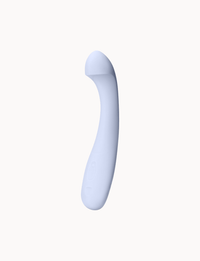
G-spot Vibrator: Typically curved, these vibrators are designed to reach and stimulate the G-spot, providing deeper sensations during penetration.

Finger Vibrator: Small and often worn on the fingertip, these offer precise control and are perfect for targeted stimulation.

Couples Vibrator: Designed to be worn during intercourse, they provide simultaneous pleasure by stimulating both partners.

Vibrating Cock Ring: Worn around the base of the penis, these enhance sensations for both partners during sex and can help with stamina.

Suction Vibrator: These use suction air-pulse technology to create a unique sensation for the clitoris, often simulating oral stimulation.

Wand Vibrator: Known for its powerful motors and larger size, these versatile devices can be used all over the body for broad-based pleasure.

Bullet Vibrator: Compact and portable and designed for targeted stimulation and are perfect for both solo and partnered play.

A: Yes! Dame vibrators are designed to be waterproof, making them suitable for use in the bath or shower. They also come with rechargeable batteries, eliminating the need for disposable batteries and ensuring long-lasting pleasure. Most can be charged via USB, making it easy to keep them ready for when the mood strikes.

A: Dame vibrators are touted for their whisper-quiet motors, designed to pleasure without drawing attention or distracting during intimate moments. If you're looking for a discreet vibrator, try looking for something smaller in size, like a bullet vibrator.