


sinikiwe dhliwayo
Culture

Naaya Founder Sinikiwe Dhliwayo on Decolonizing Wellness

7 min read

Created on 20/08/2020
Updated on 13/10/2022
Alexandra Fine

Alexandra Fine

Dame founder & sexologist

10+ years of experience

Sexual wellness Orgasm science Pleasure education

Alexandra Fine is the co-founder and CEO of Dame, a pioneering sexual wellness company known for its innovative products and mission to close the pleasure gap. Recognized in Forbes’ 30 Under 30 2018, Alexandra leads Dame in designing user-centered tools that enhance intimacy, receiving acclaim from major outlets like The New York Times and Wired. Under her leadership, Dame Products has become a leader in the sexual wellness industry, raised over $14M in capital, and launched in Target and Walmart, all while advocating for women's health and breaking barriers in advertising.

Edie Elliott Granger

Edie Elliott Granger

Editor & content strategist

3+ years of experience

Sexual wellness Orgasm science Pleasure education

Edie Elliott Granger is Dame's editor and content strategist specializing in sexual wellness, pleasure education, and accessible health information. She helps shape editorial content at Dame, translating research, expert insights, and cultural conversations into clear, approachable resources. With a background in sex education, her work focuses on making conversations around sex, bodies, and pleasure more informed, inclusive, and stigma-free.

Racism and white supremacy pervade our nation’s fabric—in everyday life, in politics, in culture, and even in the wellness space. For decades, white people have ignored or sidelined the voices of Black people, especially Black women and non-binary people, during conversations about sexual wellness, pleasure, and intimacy. There has been a notable shift in the past few months, but there is still ample work to be done. Sinikiwe Dhliwayo is an art director, public speaker, and founder of Naaya, a company focused on making wellness equitable and restorative for BIPOC individuals. She consistently engages in dialogue centered around racial justice, white privilege, and the radical nature of Black rage and joy. Sinikiwe took time to speak with us about decolonizing sexual wellness.

How did your journey in the wellness space begin? Why did you decide to launch Naaya?

I started practicing yoga after an injury while training for the New York marathon. As a part of my physical rehabilitation, my physical therapist suggested that I start practicing yoga. At the time I started practicing, I was in a not-so-great job situation. My salary was maybe $30,000. In addition to my full time job , I was doing all of these odd jobs just to get by. So I started practicing yoga and then I really liked it. My entry point into the practice was a very physical entry point. I grew up playing three sports: soccer, lacrosse, and cheerleading. I think the interesting thing for me was that it was never touted as wellness growing up. I was just playing sports. It wasn’t “we’re going to do wellness activities now.” It was just a way of living life. My entry point into starting Naaya was really from a visual standpoint. I’m a photo/video art director. For four years, I worked at Men’s Health magazine where essentially every month I made a magazine for white men and their health issues and how they can best optimize to be well. I didn’t see myself being reflected in either the workplace or the magazine, and this really started to wear on me. When I got injured and started practicing yoga, I was looking at ways to teach young people the practice of yoga. I started teaching yoga to high school students with a nonprofit called Bent on Learning which puts yoga teachers in NYC public schools. From there I realized that there was still not a lot of representation. A lot of the teachers with that nonprofit were white teachers who were serving Black and brown young people. I tried to set up an afterschool program where kids could practice yoga for free.
If you only sleep with BIPOC folks but you don’t seriously date them, maybe you are fetishizing them.
It was kind of a flop for a lot of reasons. It's easy to captivate a young person’s attention in a classroom setting , where yoga is an alternative to other gym activities, versus expecting them to go into a studio that is white-owned, potentially in a neighborhood that they don’t live in or aren’t necessary familiar with, and expecting them to show up in the same way. Also, they’re high schoolers. They have Instagram and other things, so getting a student to dedicate time to yoga, unless they’re super into it, is difficult. So with the combination of all those experiences, I was trying to figure out how I could create the access that I thought was lacking in the wellness space. Initially, I wanted to have a physical yoga studio space. But I’m always trying to think of how to innovate on what already exists and to do it in a different way, not to say better, but just different. Physical yoga studios have very slim margins in terms of profit. And in New York City, you need financial resources to rent a space, to be able to open a studio. I knew that I didn’t have those financial resources and I knew that running, operating, and being in a yoga studio every day was not for me.

What does it mean to you to decolonize sexual wellness? How can individuals, communities, and companies work to do this?

I don’t think that decolonization can happen without truly accessing and addressing how white supremacy operates in the sexual wellness space. In like dating apps, that looks like white women successfully matching with men of any race because they fit into the societal norm of what constitutes as beautiful. On the opposite end of the spectrum, that looks like Black women being highly fetishized (“you’re cute for a Black girl”) and no real recourse for men who spew these comments. If dating apps wanted to fully stand behind BLM and being anti-racist, then folks who violate their terms and conditions would be blocked from using the platform.
In retrospect, I would take back all the fake orgasms in my twenties and take the opportunity to really connect with my bedfellow.
From an individual standpoint, looks like really tuning into what your preferences are and maybe why they are that way. Like if you “don’t date” outside of your race, is that just your preference or is it because you have some ingrained anti-blackness or deeply entrenched racism that you have not addressed? Or if you only sleep with BIPOC folks but you don’t seriously date them, or you would never consider having them meet your family, maybe you are fetishizing them. From a brand standpoint, decolonization looks like how you are actually treating the BIPOC folks who work for you, who purchase your products. Are your entire social media feeds or marketing campaigns filled with white women and void of BIQTPOC folks?

What advice would you give to people, especially Black folks, who are trying to tend to their sexuality?

That it's ok if it doesn't look like what we see in the media or have been otherwise taught. It's also ok to ask for what you want and be open about what you desire. In retrospect, I would take back all the fake orgasms in my twenties and take the opportunity to really connect with my bedfellow. That said, could most of those folks handle an open and honest conversation? It's questionable. Thank god for growth. I now only want bedfellows that I can be honest with.

There is a lot of conversation around using our imagination as a starting point for social change. What kind of changes do you imagine for the wellness space?

I am imagining a wellness space where being a Black, Indigneous or person of color is not a novelty. Right now it feels like white folks are playing in diversity. Like they haven’t really gotten to the root (see: racism) of why they don’t actually value BIPOC folks. Yet they want to get proximal to us to make it seem like they have really done something. It is always apparent to me when people have never really interacted with a Black woman and/or they don’t see me as fully human. Like for fuck’s sake, we are in a global pandemic, I am person who has not left her home in six months, is deeply missing her people, and is constantly being bombarded by the stories of folks that could be her kindred getting killed. So sorry it's been 24 hours and I haven’t responded to your email to do free labor, FOH!

What are some organizations or people you’d like folks to give their attention to?

Pro Hoe, a podcast founded by Penda N’diaye. Sex educator Ericka Hart. Founder of Loom Erica Chidi-Cohen. Writer’s Note: Please consider donating to The Check-In, an initiative to provide therapy and yoga sessions to BIPOC high school students during COVID-19.

Leave a comment

FAQs

A: A vibrator is a powerful and versatile personal pleasure device that creates vibrations to stimulate various sensitive areas of your body, like the clitoris and G-spot. They come in a wide range of shapes, sizes, and features, so there's something for everyone.

Vibrators can be used on almost any erogenous zone, offering unique sensations that can boost your pleasure and help you discover what feels amazing. Some are designed to mimic penetration, while others focus on external stimulation to give you an unforgettable experience.

Did you know that fewer than 20% of vulva-owner can climax solely with vaginal stimulation or intercourse? This is why vibrators have been growing in popularity, and why companies like Dame are dedicated to amplifying the conversation of closing the pleasure gap.

Learn more on the blog.

A: Using a vibrator can enhance your pleasure significantly, but where you use them differs based on preference and if you are a vulva or penis owner. Begin by selecting a comfortable and private space where you feel at ease. If desired, use sex toy-safe lubrication, as this will enhance sensations and reduce friction. Turn on your vibrator (usually a button on the opposite end of the "head"), and explore different settings or intensities using the buttons provided on the device and gradually finding what feels best for you.

For an additional step-by-step guide, check out detailed instructions here, which talk about insights on techniques, positioning, and tips for maximum pleasure.

A: There are numerous types of vibrators, each designed for various forms of stimulation:

Clit Vibrator: These are specifically shaped to target the clitoris, often with a compact and discreet design for ease of use.

G-spot Vibrator: Typically curved, these vibrators are designed to reach and stimulate the G-spot, providing deeper sensations during penetration.

Finger Vibrator: Small and often worn on the fingertip, these offer precise control and are perfect for targeted stimulation.

Couples Vibrator: Designed to be worn during intercourse, they provide simultaneous pleasure by stimulating both partners.

Vibrating Cock Ring: Worn around the base of the penis, these enhance sensations for both partners during sex and can help with stamina.

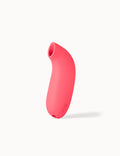
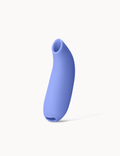
Suction Vibrator: These use suction air-pulse technology to create a unique sensation for the clitoris, often simulating oral stimulation.

Wand Vibrator: Known for its powerful motors and larger size, these versatile devices can be used all over the body for broad-based pleasure.

Bullet Vibrator: Compact and portable and designed for targeted stimulation and are perfect for both solo and partnered play.

A: Yes! Dame vibrators are designed to be waterproof, making them suitable for use in the bath or shower. They also come with rechargeable batteries, eliminating the need for disposable batteries and ensuring long-lasting pleasure. Most can be charged via USB, making it easy to keep them ready for when the mood strikes.

A: Dame vibrators are touted for their whisper-quiet motors, designed to pleasure without drawing attention or distracting during intimate moments. If you're looking for a discreet vibrator, try looking for something smaller in size, like a bullet vibrator.