The Insidious Roots of Modern Hair Removal Conventions
Culture

The Insidious Roots of Modern Hair Removal Conventions

9 min read

Created on 27/05/2022
Updated on 13/10/2022
Suzannah Weiss

Suzannah Weiss

Author

As of 2016, 84 percent of American women reported removing at least some of their pubic hair, and 85 percent of women in the UK were removing their leg hair the same year. This convention is costly, in terms of time as well as money: One 2008 survey found that over the course of their lifetimes, women who shave spend $10,000 on hair removal, and women who wax spend a full $23,000. But there’s also a cost to keeping our hair: 59 percent of Americans consider it unattractive for a woman to have leg hair. Nowadays, choice feminism tends to see all these choices as equally feminist. As long as the woman chooses a certain hair removal routine herself, the logic goes, there’s nothing wrong with that choice; hair removal may even be empowering if it makes her feel good. In their new book Hairless: Breaking the Vicious Circle of Hair Removal, Submission and Self-Hatred (Wiley, May 2022), Spanish writer and translator Bel Olid takes on this notion, asking why so many women choose to remove hair and whether they really have a choice, given the social repercussions they face if they don’t.
hairless book Hairless: Breaking the Vicious Circle of Hair Removal, Submission and Self-Hatred by Bel Olid
Sprinkling in information about the history of pubic hair removal while recounting their experience abandoning their own shaving rituals, Olid makes a bolder claim than most mainstream feminists: “If we want future generations to grow up truly more free, at some point we have to limit where we shave and at what age we begin to shave.” Specifically, they argue that women with relative privilege — such as cisgender women with supportive communities — should let their body hair grow out to pave the way for less privileged people (like trans women) to have more freedom. I spoke with Olid about the complex relationship between feminism and body hair, why the hair removal industry is so pernicious, and their vision for a world where women (and everyone) can truly, freely choose what they do with their hair and their bodies. In your book, you write, “It’s fascinating that the hairless body, the fruit of a social mechanism such as hair removal, is considered a sign of innate femininity. It would be logical for body hair, which separates the girl from the woman, to be considered intrinsically feminine (and even sexy).” Given how illogical it is, how did we get the idea that body hair is unfeminine? It's really linked to the pressure on our bodies to get as close as possible to an impossible ideal. Not even the women we see performing the ideal are actually the ideal because they, of course, are photographed, and they have this whole team behind them choosing their looks and their makeup to produce that kind of ideal. You talk about that in another part of the book, where you discuss the movie trope where a woman gets a makeover and it’s “revealed” that she was beautiful all along, when in reality, she’s “beautiful” because she’s put hours into it. It is claimed to be natural beauty, but it’s not natural at all. It's absolutely produced. You need a lot of actions in order to look like a natural beauty. You get all these ads for natural makeup: “It will look as if you’re not wearing any.” Well, then, I might as well not wear any! But what they mean is that you won’t look the same; you’ll look gorgeous, and nobody will know you spent hours working on that. A lot of the beauty ideals for women are about pretending you are not spending hours and loads of money to get there, even if you are required to do so. What about the idealization of hairless vulvas in particular; what do you think that’s about? It’s pretty linked to trying to level us with prepubescent children, little girls. We sexualize them to make them look older, and then grownup women, we make them look younger. Removing the hair in those areas, that puts us all in the same bucket of sexual objects for the male gaze. I think it’s a lot about disempowering women as real grownups with real experience and power. I remember trying to find women with pubic hair on Pornhub, and even those videos feature women with partially removed hair! It’s like we don’t even have a way to see what a woman’s natural body looks like. The first time I saw a woman with hairy legs, I was seven or eight, and I was like, “Oh my god, what’s all that hair?” And I had no idea because I had never seen a woman with hairy legs, and obviously, I looked at my own legs and was like, “This is weird.” The lack of images of women who have not shaved does make us feel inadequate and fight with our own bodies. Why was it important for you to avoid the “if it’s your choice, it’s empowering” kind of thinking and take a stronger stance of encouraging women to keep their hair? I am all about everyone’s personal choice and survival strategy, but I think as a collective, as a society, we have to acknowledge this is not a choice. You’re not doing this because you want to. You’re doing this because you have to, and if you’re doing this because you want to, you have to think about why you are choosing to harm your body — because it hurts — and why you’re spending so much energy and time and money on something that is an endless task. Hair will grow again. So, do you really want to spend this time and this money, or is what you really want social approval? Because then, instead of changing your body, maybe we should change society. I am not against what we do to survive, but I am for a social change in the gender norms that are not helping us live better lives but are making us live miserable lives. What would you say to a woman who is aware of all of this but still chooses to remove her body hair because gaining that social acceptance makes her feel more confident? That's absolutely valid. I have nothing absolutely against that, and the only thing that I would say is that you can change your beauty standards, and what you find sexy can change over time. So maybe train yourself to look at your body in other ways. Maybe try to look at your body through kinder eyes and just see how you feel about this in a few months, because it has changed for me, and it has changed for a lot of people I know. Sometimes, I find it much easier to find other people attractive than myself. For example, regarding body weight or body hair, when I look at my friends, I find them amazing, and when I look at my body, I don’t find it amazing. So maybe start with your friends and see how amazing they are and how amazing they look, and look at bodies that are not necessarily how bodies are shown in the media. There's the @i_weigh account; Jamila Jameel has this Instagram account and does amazing podcasts on body image. A big focus of the body positivity movement has been helping women feel beautiful or pretty. So I love how your book challenges the idea that “feeling pretty” — the promise of many beauty products — should even be an aim for women at all. Do you think it’s truly possible for a woman to divorce her happiness from her sense of prettiness? Everything pushes women to not do that, and it's even worse because you’re never going to feel pretty no matter how much effort you put in. It’s a bottomless pit. I remember when I was pregnant with my first child, I put on a lot of weight, and when I went to see the doctor, the doctor kept telling me, “You’re putting on a lot of weight. You’re very young. You’re never going to get thin again.” I was 23 at the time, and I was too thin when I got pregnant, and I put on like 20 kilos , and one day, I realized, “I'm really happy. I’m really happy that I’m pregnant. I’m having a blast. I'm really enjoying food, and I don't feel that I should be put down every time that I go to the doctor.” I told the doctor, “I'm a translator. I’m not a model. I want to enjoy my pregnancy. I want to enjoy food, and if I'm healthy, I never want to hear about my weight again.” And I felt so free all of a sudden. So I think that it’s worth the effort of stepping back and saying, “Maybe today, I don’t feel like the most beautiful person in the world. But you know what? It’s sunny. I can still go for a walk and be with my friends and do stuff that I like. It doesn't really matter.” There’s a lot of pressure on women to be liked. You want people to think you’re beautiful. You want people to be nice, even people you don’t like. So it’s refreshing not to please everybody all the time and to think, “Do I like this person? Do I need this person to like me? Maybe it's not worth the effort. Maybe today, if I really want to feel beautiful, I can do things that make me feel beautiful. But maybe that doesn’t need to be all the time, because that's exhausting to do all the time.” I’m all for feeling pretty at certain points. I’m all against owing prettiness all the time to everybody.

1 comment

To shave or not? A person preference.Men are visual creatures & there is likely an innate pattern recognition to their arousal.when it comes to giving oral pleasure to a partner some may not always want a mouthful of hair.Being shaved may also give different sensations to both giving and receiving. I think the article somewhat over analyzes the situation

CAM

Leave a comment

FAQs

A: A vibrator is a powerful and versatile personal pleasure device that creates vibrations to stimulate various sensitive areas of your body, like the clitoris and G-spot. They come in a wide range of shapes, sizes, and features, so there's something for everyone.

Vibrators can be used on almost any erogenous zone, offering unique sensations that can boost your pleasure and help you discover what feels amazing. Some are designed to mimic penetration, while others focus on external stimulation to give you an unforgettable experience.

Did you know that fewer than 20% of vulva-owner can climax solely with vaginal stimulation or intercourse? This is why vibrators have been growing in popularity, and why companies like Dame are dedicated to amplifying the conversation of closing the pleasure gap.

Learn more on the blog.

A: Using a vibrator can enhance your pleasure significantly, but where you use them differs based on preference and if you are a vulva or penis owner. Begin by selecting a comfortable and private space where you feel at ease. If desired, use sex toy-safe lubrication, as this will enhance sensations and reduce friction. Turn on your vibrator (usually a button on the opposite end of the "head"), and explore different settings or intensities using the buttons provided on the device and gradually finding what feels best for you.

For an additional step-by-step guide, check out detailed instructions here, which talk about insights on techniques, positioning, and tips for maximum pleasure.

A: There are numerous types of vibrators, each designed for various forms of stimulation:

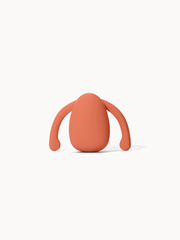
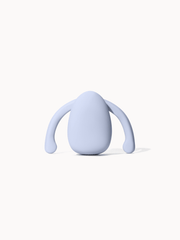
Clit Vibrator: These are specifically shaped to target the clitoris, often with a compact and discreet design for ease of use.

G-spot Vibrator: Typically curved, these vibrators are designed to reach and stimulate the G-spot, providing deeper sensations during penetration.

Finger Vibrator: Small and often worn on the fingertip, these offer precise control and are perfect for targeted stimulation.

Couples Vibrator: Designed to be worn during intercourse, they provide simultaneous pleasure by stimulating both partners.

Vibrating Cock Ring: Worn around the base of the penis, these enhance sensations for both partners during sex and can help with stamina.

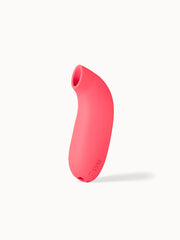
Suction Vibrator: These use suction air-pulse technology to create a unique sensation for the clitoris, often simulating oral stimulation.

Wand Vibrator: Known for its powerful motors and larger size, these versatile devices can be used all over the body for broad-based pleasure.

Bullet Vibrator: Compact and portable and designed for targeted stimulation and are perfect for both solo and partnered play.

A: Yes! Dame vibrators are designed to be waterproof, making them suitable for use in the bath or shower. They also come with rechargeable batteries, eliminating the need for disposable batteries and ensuring long-lasting pleasure. Most can be charged via USB, making it easy to keep them ready for when the mood strikes.

A: Dame vibrators are touted for their whisper-quiet motors, designed to pleasure without drawing attention or distracting during intimate moments. If you're looking for a discreet vibrator, try looking for something smaller in size, like a bullet vibrator.