





What Does Stress Do to Your Sex Drive?
4 min read


As it turns out, daily stressors can really kill the mood. While sex can actually be a great way to release stress, chronic stress itself can hinder women’s ability to experience sexual arousal. On both a psychological and hormonal level, it’s quite literally more difficult to get in the mood when daily stressors are distracting you from staying in the moment. Of course, the implications of the connection between stress and sex extend far beyond the bedroom, as high levels of stress tend to directly affect mental health, overall wellbeing, and quality of life. Relationship satisfaction may also be negatively affected over time when there’s ongoing difficulties with intimacy.
What is stress, anyway?
Stress is a natural part of life, and it can show up in a variety of ways. While there are a number of traumatic events—like the death of a loved one, chronic health issues, and more—that can put our minds and bodies under duress, the slow accumulation of smaller, seemingly insignificant stressors can have a negative effect on us as well. These daily stressors can be anything from dealing with a tough commute to mounting deadlines at work or an overflowing email inbox. In many ways, it’s unrealistic to have a stress-free lifestyle, but it’s important to be aware of the ways in which sustained stress can impact our health and well-being.
Increased Stress, Decreased Sex
Stress can have a number of negative effects on the body, several of which can directly affect women’s sexual arousal, function, and satisfaction. It increases the body’s cortisol levels, which can be harmful over an extended period of time—studies have shown that the hormones released in response to stress can interfere with hormones that influence sexual response. Furthermore, chronic stress effects like increased blood pressure may lessen blood flow to other parts of the body, including the genitals, a process which is necessary for physical arousal. Beyond the many ways in which stress can have adverse physiological effects on our sex drive, we’re probably much more aware of and familiar with its psychological effects. If, during an intimate moment, you’ve ever found your mind drifting to anxiety-inducing subjects like undone and overdue to-dos, you already know how stress can end up ruining the mood. Focus is key for intimacy and arousal, and when a number of daily stressors build up over time, it becomes difficult to get past those distractions.
Research on Stress & Sex
In a study that attempted to discover the link between naturally-occurring stress and sexual function in women, researchers worked with women who 1) reported average or high levels of chronic stress, and 2) were currently sexually active with men. Study participants were tasked with self-reporting about daily stressors and various sexual function indicators (including desire, arousal, lubrication, orgasm, satisfaction, and pain). On top of these real-world reports on sexual function, researchers also measured sexual arousal and distraction in a laboratory setting by showing participants both neutral and erotic films. Both in a controlled setting and in real life, the study proved that “chronic daily stressors are correlated with impairment of women’s genital but not subjective sexual arousal responses,” with increased distraction emerging as the most strongly correlated side effect.
What can I do if stress is affecting my sex drive?
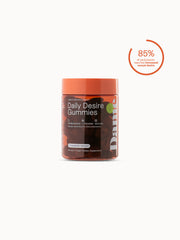
As mentioned above, decreased sexual arousal and function is just one of the ways in which chronic stress can negatively impact our lives—which is all the more reason that keeping stress levels in check should be a crucial concern. Luckily, there are a number of ways to combat chronic stress, from regular exercise and increased sleep to meditation or journaling. Of course, when your day-to-day schedule is already packed, it can be difficult to prevent stress by adding yet another thing to the to-do list. For those of us who need help navigating stress but don’t have quite enough time to do a daily yoga flow, there are a variety of natural supplements and vitamins that can help decrease stress while you go about your day—a number of which we incorporated into the formula for our newest product, Desire Gummies. Just two of these strawberry-mango flavored gummies, once a day; that’s all you need to smooth out your stress and clear the way for increased connectivity. Among the ingredients are a number of powerful adaptogens, including:
- Ashwagandha is an adaptogen from India that’s notable for its ability to lower cortisol levels and improve mood.
- Shatavari balances female hormones related to depression and burnout.
- L-theanine can reduce anxiety and stress while promoting relaxation, too.
Don’t Forget to Stay Connected
Another great way of reducing stress is to maintain connections with the people in your life, whether platonic, familial, or romantic. Talking about and commiserating over the struggles you’re having—both large and small—can help boost resilience and find support, too.
-
 Sexual Wellness
What Is The Difference Between Vaginal Moisturizer and Lubricant?
-
 Sexual Wellness
How Air-Pulse and Clitoral Suction Vibrators Actually Work (And Why They’re So Popular)
-
 Sexual Wellness
The Bullet Vibrator Guide: Why Small Toys Win at Precise, Pinpoint Stimulation
-
 Sexual Wellness
How to Introduce a Vibrator Into Partnered Sex Without the Awkwardness
- View all


