



Chemically speaking, a healthy vagina is a little… funky. It sits roughly between 3.8 and 5.0 on the pH scale, and that acidity is maintained by lactobacilli, the bacteria that make up most of a typical vaginal microbiome.
Can toys or accessories change Vaginal pH?
Anything that raises your pH for long enough can make it easier for yeast and unwanted bacteria to take hold. Lubricants, for example, can shift pH if their formula sits far outside the body's range. Toys made from non-porous materials won't change pH on their own, though what you clean them with can.
Why so acidic?
Thank the lactobacilli for that. They produce lactic acid as they metabolize glycogen in the vaginal tissue. That lactic acid keeps the environment on the acidic side. The Cleveland Clinic describes the typical range as roughly 3.8 to 5.0 for people of reproductive age, with the number drifting higher before puberty and after menopause as estrogen levels change. The acidity is a kind of passive defense, since most organisms that cause infections don't thrive in it.
Think of pH as a signal, not a score––there's no perfect number to hit. It's a self-regulating system, and it mostly wants to be left alone.
What moves the needle, and by how much?
A few ordinary things shift vaginal pH temporarily. Most of these will pass on their own: a healthy microbiome re-acidifies within a day or so. The concern is repeated or sustained disruption, not a single shift. Your vagina is stronger than you know!
Semen is alkaline, closer to 7.2 to 8.0, so unprotected intercourse raises vaginal pH for a period afterward.
Menstrual blood is also closer to neutral, which is why pH tends to run higher during your period.
Douching and internal washing will strip lactobacilli directly. The American College of Obstetricians and Gynecologists advises against douching for this exact reason.
Antibiotics taken for an unrelated infection can reduce lactobacilli along with the target bacteria.
Menopause and breastfeeding also lower estrogen, which reduces the glycogen available to lactobacilli and raises baseline pH.
Does your lube change vaginal pH?
It depends on the formula. A lubricant designed to sit near the body's own acidity, often labeled pH-matched or pH-balanced, is unlikely to move the pH too much. One formulated well above that range, which includes a number of drugstore products, will add an alkaline load every time it's used.
Read those labels! Two ingredient notes matter more than the pH claim on the front. Glycerin is a sugar alcohol, and for people prone to yeast infections, it can feed them, regardless of the product's stated pH. An added fragrance and warming or tingling agents are among the most common sources of irritation.
That’s why our water-based Aloe Lube (dame.com/products/aloe-lube), at $19 for a 4 fl oz bottle, is pH-balanced at pH 4 and glycerin-free.
Do your toys affect pH?
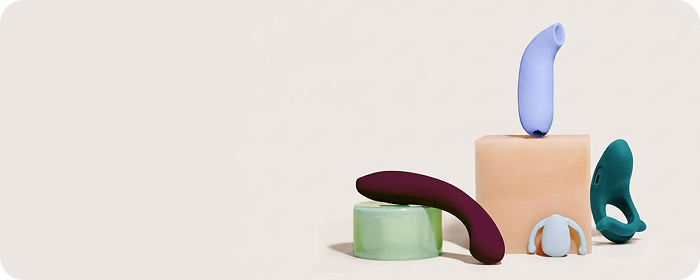
The material itself won’t. Medical-grade silicone, ABS plastic, and glass are all non-porous and chemically stable, so they won't introduce anything that changes the vaginal environment. It's a practical argument for playing with non-porous silicone vibrators, which most of our Dame products use, over porous materials like jelly rubber or TPE, which can hold residue that cleaning won’t fully remove.
What can matter is everything around the toy: antibacterial or fragranced soap left on the surface, a silicone-based lubricant used with your silicone toys, or a toy shared between partners without cleaning or a barrier in between. Mild, unscented soap and water, dried fully, is the whole routine. No special spray or potions required.
How to tell if your pH is off
You can't feel a number, but your body usually lets you know when something's shifted, through a change in discharge, an unfamiliar odor, itching, or burning. A fishy odor in particular is associated with bacterial vaginosis, which involves a rise in pH and a drop in lactobacilli.
Those over-the-counter pH test strips give you a reading, not a reason. Resources like Planned Parenthood and ACOG both point people with these symptoms toward a clinician rather than self-treatment: bacterial vaginosis, yeast infections, and trichomoniasis present similarly and call for different treatment. If you're treating what you're pretty sure is yeast and it isn't clearing up, skip round two of the same product and get it looked at. When in doubt, please consult your doctor.
Questions people actually ask
What is a normal vaginal pH?
Roughly 3.8 to 5.0 for people of reproductive age, according to Cleveland Clinic. It runs higher before puberty, after menopause, and during your period.
Can lubricant cause a yeast infection?
Not directly, but ingredients like glycerin in a formula can feed yeast and raise the odds of a flare for people who are already prone to them. A glycerin-free, pH-matched formula removes the risk.
Do sex toys change your vaginal pH?
Non-porous materials like medical-grade silicone, ABS plastic, and glass don't. Residue from fragranced or antibacterial soap, or a toy shared without cleaning, is the more likely culprit of irritation.
Do I need a pH-balancing wash or gel?
Truthfully most people don't need one, and any idea otherwise is purely marketing. ACOG advises against douching and internal washing, since both remove the lactobacilli that maintain acidity. Warm water on the outside does the job.