Did you know that your libido AKA your sex drive AKA your desire to get freaky is more complicated than we believe? We are taught that our motivation to have sex is an intrinsic human quality unique to each person—like hair type, skin color, or favorite food. We’re also told we have only two categories to fall into: “high” or “low.” But we’ve been looking at it all wrong and here’s why:
According to Dr. Emily Nagoski, sex educator and author of
Come As You Are, we can understand sexual desire in terms of when and how we become aroused—it’s context-dependent and definitely
not a fixed drive. Here’s the kicker: Desire doesn’t always precede arousal and arousal doesn’t always follow desire! And some don’t experience sexual desire at all; just think of asexual people.
What We See in Movies: Spontaneous Desire
Spontaneous desire can feel like going from “0 to 60 in 3.5” (like that Rihanna reference?). We can understand it as a readiness to engage in sex in any context, without needing much stimulation. Maybe you see a cutie pass by at the grocery store and get a tingle “down there.” Or… you’ve been in a quarantine-enforced long-distance relationship for weeks and the first time you meet with your partner again, the clothes are flying off. That’s spontaneous desire. It’s just
there and it’s the black-and-white model we tend to learn about when it comes to getting turned on—we either are or aren’t. Those who aren’t tend to be labeled with the un-cool and un-sexy designation of having a “low libido” and might even seek help for
HSDD (hypoactive sexual desire disorder).
You might view sex through the lens of, “What am I getting out of this experience? Is the effort worth the reward?”
What Most People Experience: Responsive Desire
So if you don’t get turned on easily, or spontaneously, does that mean you’re broken? Absolutely not. In fact, you’re more normal than you think—especially as
COVID-19 has altered the way people relate to sex in 2020, some for better, some for worse. Dr. Nagoski claims most people experience desire in a responsive way, and like everything else, the amount of stimulus necessary to incite a response varies from person to person. If your desire is more responsive, you might view sex through the lens of, “What am I getting out of this experience? Is the effort worth the reward?”
Understanding how we get turned on means we also have to understand how we get turned off – these two processes work in tandem. In the dual-response model of arousal, there’s what Dr. Nagoski calls the “accelerator-brake system.” The brakes assess what keeps us from feeling safe and comfortable, like stress and discomfort, while the accelerators help us lean into what feels good and sexy. “Our accelerators and brakes learn when to respond through experience,” she says.
How can we take context under our control to close the gap of a fickle desire? Glad you asked. Start by acknowledging what’s holding you back from experiencing pleasure. Sometimes it’s obvious: an upcoming work deadline, rowdy pets, the third sleepless night in a row. Other times, it’s more insidious: chronic pelvic pain, loss of affection from a partner, or racism.
You can’t feel good if you’re worried. You can’t feel good if you feel scared. You can’t feel good if you’re in danger.
Irma, Certified Sex Educator and founder of
Dirty South Sex Ed, assures us that “sexual desire is affected by sociocultural and psychological factors, as well as hormones.” This means that we cannot separate our lived experiences from our desire to get freaky, as those experiences might be directly deterring our ability to lean into that desire. For BIPOC, the daily stress of experiencing and witnessing racial violence blocks the feeling of safety. For sexual trauma survivors, sexual stimulus of any nature might be perceived as a threat. The same can be said for Black queer and trans folk, who are often victims of layered forms of marginalization, like financial, housing, and medical insecurity. You can’t feel good if you’re worried. You can’t feel good if you feel scared. You can’t feel good if you’re in danger.
Feeling Good: It’s Not Just About Foreplay
Get back to basics:
Making sure you are consistently well-rested, nourished, and hydrated is key. By fulfilling the most basic survival requirements, you are reminding your body that it’s taken care of and eliminating any underlying discomfort.
Assess your environment:
Surround yourself with individuals and gather in spaces that feel comforting. This might mean selectively dating people who understand and affirm your lived experiences, hanging out at the local Black-owned coffee shop, or foregoing car sex because it’s just not that fun for you.
Seek explicitly erotic circumstances:
If you’re not turned on by a suggestive look, simply turn the heat up. Let your partner know that movies with a decent dose of intimate scenes help set the mood for you or watch porn together before introducing any physical touch. Arousal starts in the brain, y’all!
Keep intimate products in reach and in sight. Leave the massage candle on the nightstand. Keep your
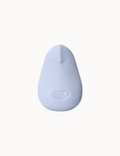
Fin vibrator on a bookshelf. Stash lube in your purse. The
#BBMini holds all of these goodies in a fun-sized package, making it easier for you to open up to pleasure. These discreet yet strategic placements can serve as subconscious cues to keep sex on the brain and ease the burden of having to go out of your way for pleasure aids.
Remember, this isn’t just about foreplay. To help stimulate a responsive desire, we have to do our best to decrease stress and increase eroticism. The goal is always to attune to your body’s needs.
This post was created in collaboration with Blex.