

Sexual Health Accessories Guide: Lubricant, Cleaner & What You Actually Need
August 31, 2026
Keeping a toy in good shape isn't complicated, but the basics (lube, cleaner, and a proper place to store it) are easy to overlook until something...
 Free Shipping
 Free Gift
 60-Day Returns
 3-Year Warranty
6 min read
Created on 28/01/2026

If you’ve ever thought: Why am I not horny, but my body is responding? Why do I want sex mentally, but I can’t get aroused physically? Is something wrong with me?
You’re not alone and there’s nothing wrong with you.
One of the most misunderstood parts of sexuality is that desire and arousal are not the same thing. They often overlap, but they don’t always show up together. And when they feel out of sync, it can create confusion, frustration, or even shame — especially for women.
Understanding the difference between sexual desire vs. sexual arousal can be a game-changer. It gives you language, clarity, and permission to stop measuring your sexuality by one narrow definition of “normal.”
Let’s break it down.
Sexual desire is the interest in sex. It’s the mental and emotional experience of wanting intimacy, craving connection, fantasizing, or feeling motivated toward sexual activity.
Desire is often driven by the brain’s motivation and reward circuits — especially dopamine, a neurotransmitter linked to anticipation, pleasure, and drive.
Think of desire as:
Desire can be spontaneous (it just appears), or responsive (it builds after stimulation or emotional closeness). It isn’t just hormonal — it’s influenced by context, stress, relationship dynamics, self-image, safety, and so much more.
Sexual arousal is the body’s physiological readiness for sex. This includes changes like:
Arousal is largely regulated by the parasympathetic nervous system: the part of your nervous system responsible for “rest and digest.”
In other words: arousal requires relaxation. That’s why stress is such a common blocker. If your body is in fight-or-flight mode, arousal becomes much harder to access, even if you want sex.
Think of arousal as:

Here’s the simplest way to put it: desire is the wanting and arousal is the response.
They often work together, but they are not interchangeable.
You can experience:
And this is totally normal. Let’s unpack why.
You might wonder: Why am I not horny but I get aroused? This is one of the most common and misunderstood experiences, especially for women. You might feel lubrication, physical sensitivity, a genital response — even when mentally, you’re not interested.
This is because arousal can be reflexive. The body can respond to stimulation the same way your knee jerks when tapped, without it reflecting emotional desire.
This is also why arousal should never be used as a measure of consent. Bodies can respond automatically. That response is not a “yes.”
Instead of asking “What’s wrong with me?” try asking:
On the flip side, you might want sex, but your body isn’t cooperating. This can happen due to:
Remember: arousal relies on the parasympathetic nervous system. If your nervous system is activated by stress, your body may not be able to shift into sexual readiness, even if your brain is interested. If you find yourself in a moment like this, try taking some really deep belly breaths and focus on slow, soft touching to create safety and calm. And if your body isn’t up for it, that’s okay too.
Researchers often distinguish between:
What your body does automatically (blood flow, lubrication, sensitivity).
What you feel mentally (turned on, interested, engaged).
These don’t always match. And that mismatch is especially common in women, due to both biological complexity and cultural conditioning.
When desire and arousal align, sex can feel effortless. But more often, they work like a feedback loop:
This is why modern sex researchers emphasize that arousal isn’t just mechanical — it’s contextual.
For decades, sex education leaned heavily on the Masters & Johnson sexual response cycle, which describes sex as a linear progression:

But many people — especially women — don’t experience sexuality in a straight line.
Modern researchers have proposed more accurate non-linear, circular models, where desire can emerge after arousal begins, and emotional intimacy plays a central role.

In these models:
This shift has been huge in validating women’s lived reality.

Women are far more likely to be told things like, “You should want sex more.” “Something’s wrong if you’re not horny.” “If you’re aroused, you must be into it.”
The cultural script often assumes male sexuality as the default: spontaneous desire first, arousal second.
But women’s desire is more frequently:
When we don’t teach the difference between desire and arousal, women can be left feeling like something is wrong with them. Understanding this distinction is important to know that nothing is wrong—and that stress or safety might be key to unlocking more desire.
Because desire is linked to motivation circuits and dopamine, supporting it often involves more than “trying harder.” It can mean lowering stress, improving mood, creating intentional routines, supporting the brain-body connection.
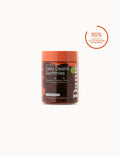
That’s one reason Dame created Desire Gummies, a daily supplement designed to support sexual wellness from the inside out.
Our formulation includes ingredients like mucuna, which is standardized for L-dopa, a building block for dopamine — the neurotransmitter associated with motivation and desire.
Many other ingredients, such as Sensoril Ashwagandha™, Shatavari, and L-Theanine are designed to help reduce stress, because stress is one of the biggest blockers of arousal and libido.
In a clinical study of participants using Desire Gummies:
Dame’s Desire Gummies are designed to be seamlessly incorporated into your routine: a simple, three-gummies-a-day ritual for enhanced well-being and pleasure. If you’re looking for a gentle way to support desire, especially when stress shows up often, they can be a powerful tool.
Desire and arousal are different and that’s not a problem. It’s just human. Sexuality is not linear. Libido isn’t constant. And your body isn’t a machine. The more language we have for these experiences, the less shame we carry.
So if you’ve ever felt confused by the gap between wanting and responding, remember: You’re not broken. You’re just complex. And pleasure is still yours.

Sexual Health Accessories Guide: Lubricant, Cleaner & What You Actually Need
Keeping a toy in good shape isn't complicated, but the basics (lube, cleaner, and a proper place to store it) are easy to overlook until something goes wrong.

Vaginismus, Pain During Sex, and How Toys Can Fit Into Recovery
Vaginismus is a real, treatable condition, not a sign that something's wrong with you or how you feel about sex.

Sex & Menopause: What Actually Changes & What Helps
Menopause changes your body's mechanics, not your right to a good sex life: here's what actually shifts and what actually helps.

Desire vs. Arousal: What’s the Difference?
Desire vs. arousal explained: dopamine, nervous system responses, and why women often experience arousal without desire (and vice versa).
August 31, 2026
Keeping a toy in good shape isn't complicated, but the basics (lube, cleaner, and a proper place to store it) are easy to overlook until something...

August 31, 2026
Vaginismus is a real, treatable condition, not a sign that something's wrong with you or how you feel about sex.

August 31, 2026
Menopause changes your body's mechanics, not your right to a good sex life: here's what actually shifts and what actually helps.

March 20, 2026
Desire vs. arousal explained: dopamine, nervous system responses, and why women often experience arousal without desire (and vice versa).

January 28, 2026
Valentine’s Day sex ideas for solo or partnered pleasure, including romantic positions, playful inspiration, and the best sex toys to enhance intimacy.

January 27, 2026
Libido isn’t just hormones. Learn what libido is, why desire changes, and what low libido really means—through neuroscience, compassion, and real life.
A: A vibrator is a powerful and versatile personal pleasure device that creates vibrations to stimulate various sensitive areas of your body, like the clitoris and G-spot. They come in a wide range of shapes, sizes, and features, so there's something for everyone.
Vibrators can be used on almost any erogenous zone, offering unique sensations that can boost your pleasure and help you discover what feels amazing. Some are designed to mimic penetration, while others focus on external stimulation to give you an unforgettable experience.
Did you know that fewer than 20% of vulva-owner can climax solely with vaginal stimulation or intercourse? This is why vibrators have been growing in popularity, and why companies like Dame are dedicated to amplifying the conversation of closing the pleasure gap.
Learn more on the blog.
A: Using a vibrator can enhance your pleasure significantly, but where you use them differs based on preference and if you are a vulva or penis owner. Begin by selecting a comfortable and private space where you feel at ease. If desired, use sex toy-safe lubrication, as this will enhance sensations and reduce friction. Turn on your vibrator (usually a button on the opposite end of the "head"), and explore different settings or intensities using the buttons provided on the device and gradually finding what feels best for you.
For an additional step-by-step guide, check out detailed instructions here, which talk about insights on techniques, positioning, and tips for maximum pleasure.
A: There are numerous types of vibrators, each designed for various forms of stimulation:
Clit Vibrator: These are specifically shaped to target the clitoris, often with a compact and discreet design for ease of use.
G-spot Vibrator: Typically curved, these vibrators are designed to reach and stimulate the G-spot, providing deeper sensations during penetration.
Finger Vibrator: Small and often worn on the fingertip, these offer precise control and are perfect for targeted stimulation.
Couples Vibrator: Designed to be worn during intercourse, they provide simultaneous pleasure by stimulating both partners.
Vibrating Cock Ring: Worn around the base of the penis, these enhance sensations for both partners during sex and can help with stamina.
Suction Vibrator: These use suction air-pulse technology to create a unique sensation for the clitoris, often simulating oral stimulation.
Wand Vibrator: Known for its powerful motors and larger size, these versatile devices can be used all over the body for broad-based pleasure.
Bullet Vibrator: Compact and portable and designed for targeted stimulation and are perfect for both solo and partnered play.
A: Yes! Dame vibrators are designed to be waterproof, making them suitable for use in the bath or shower. They also come with rechargeable batteries, eliminating the need for disposable batteries and ensuring long-lasting pleasure. Most can be charged via USB, making it easy to keep them ready for when the mood strikes.
A: Dame vibrators are touted for their whisper-quiet motors, designed to pleasure without drawing attention or distracting during intimate moments. If you're looking for a discreet vibrator, try looking for something smaller in size, like a bullet vibrator.